

The differences and characteristics of home textile bedding printing
Oct 20, 2023
Description and differences of twill printing, reactive printing, brushed printing, jacquard, and silk cotton fabrics in product classification
First of all, it should be noted that these 5 fabrics are all twill fabrics. The differences are as follows:
40-count twill printed fabric: The width of the fabric is 2.3 meters. After being configured with dyes, it is printed on cotton to produce various patterns. It is a traditional printing and dyeing process of weaving first and then dyeing. It has bright colors and a wide range of colors. Pure cotton fabrics will shrink slightly, will not pill, and will not fade easily. However, if the fabric is darker in color, the color may fade when it is first put into the water.
60-count reactive printing fabric: The width of the fabric is 2.5 meters. It is high-grade combed cotton. It is weaved first and then dyed. It uses imported dyes and is printed and dyed with environmentally friendly technology. The color of the fabric is brighter and more pure. The pure cotton fabric will shrink slightly, will not pill, and will not fade regardless of the color depth.

60-count brushed printed fabric: The width of the fabric is 2.5 meters and it is high-grade combed cotton. During the post-processing process, this fabric is brushed to give the surface of the fabric a certain velvet feel and improve the feel of the fabric.
So what is sanding? Sanding is also called grinding. The process of using a sanding roller (or belt) to grind the surface of the fabric into a short and dense layer of velvet is called sanding, also known as sanding. It can make the warp and weft yarns produce fluff at the same time, and the fluff is short and dense. The suede surface is smooth, the hand feels plump, soft, rich in velvet feeling, the luster is soft, and there is no aurora. The brushed fabric is fluffy, thick, and has good thermal insulation properties. When you fall asleep on a cold night, it does not feel as cold as other cotton fabrics when they first come into contact with the human body. At the same time, it has the advantages of no pilling and no fading. A brushed four-piece set weighs twice as much as an ordinary four-piece set.
60-count jacquard fabric: Jacquard fabric is a high-count and high-density fabric. The pattern is woven directly through the loom. It displays different parts of the pattern through different organizational expressions. The pattern of jacquard fabric has a strong three-dimensional effect and rich pattern layers. The jacquard fabric feels soft and has good gloss.
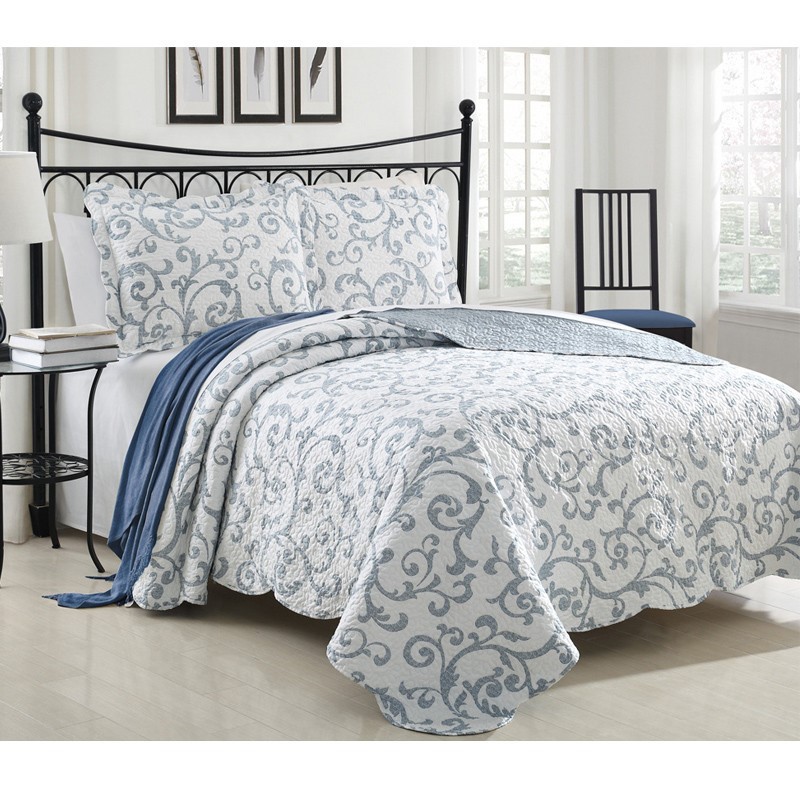
60-count silk cotton jacquard fabric: There are currently two types of silk cotton fabrics: one is the interweaving of silk thread and cotton yarn, and the other is the interweaving of viscose fiber and cotton yarn.
The interweaving of silk and cotton yarn can not only reflect the softness and smoothness of silk but also reflect the close fit and comfort of cotton. It organically integrates the properties of cotton and silk, thereby improving the taste and grade of fabrics.
The interweaving of viscose fiber and cotton yarn, the appearance of viscose is almost the same as that of silk cotton, but it has a better feel, gloss, and breathability, making it more and more widely used in fabrics.


